by Alonso Romero
CA State Lic. Concrete & Masonry C-8
CA State Lic. General Construction - B
Buckaroo Banzai the Concrete Nerd
Actual person performing the job
Date: Nov 26, 2026
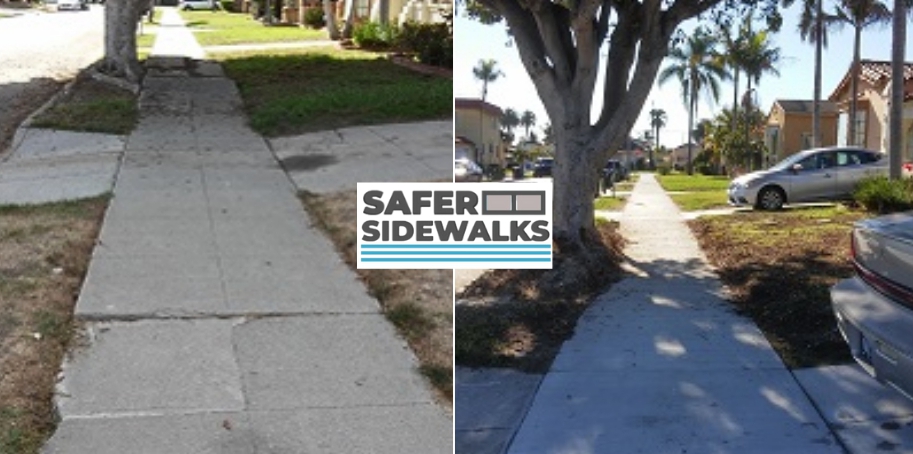
Sidewalk Repair Near Me Los Angeles
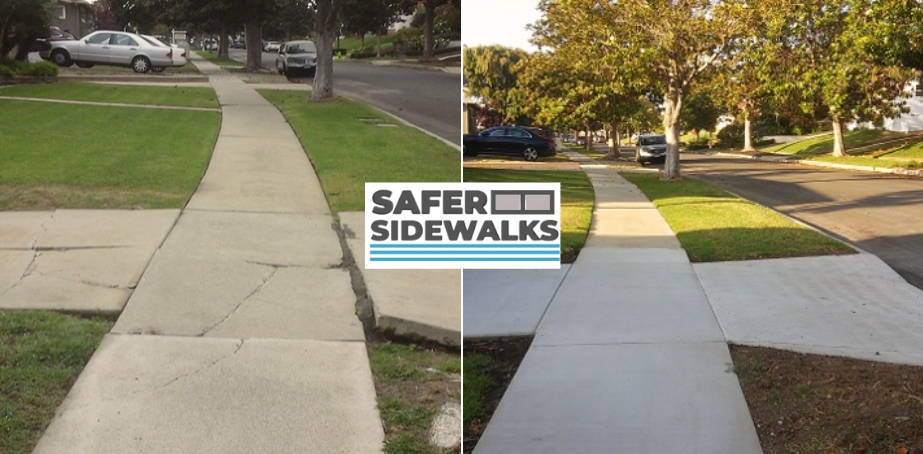
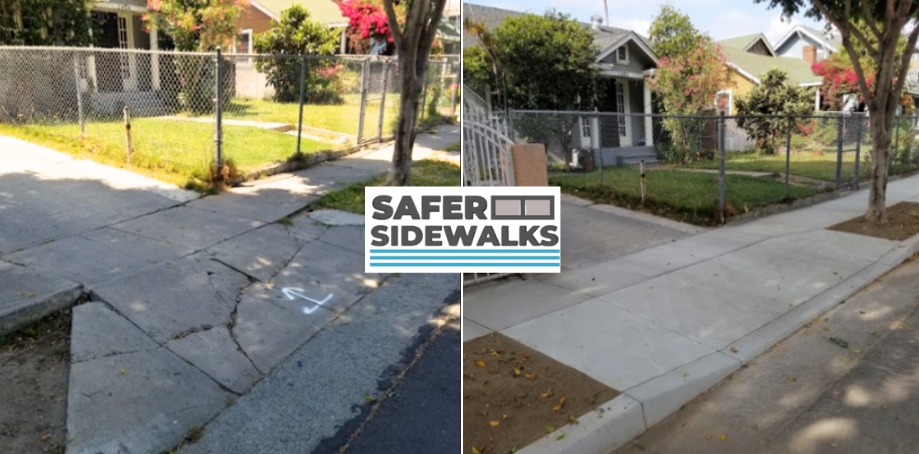
Walking down the sidewalk in Los Angeles is hazardous, to say the least. It’s not just hazardous for the pedestrian – it’s hazardous for the property owner, as well.
As a property owner, you can be found liable if a pedestrian trips and falls on your sidewalk. Is your sidewalk ADA-compliant? If pedestrians with mobility issues can’t get by on your sidewalk, you could be looking at a lawsuit – and forget about insurance. Your insurer will not issue you a policy unless your sidewalk is smooth and easy to cross.
So, what is a property owner to do?
What is causing damage to my sidewalk in Los Angeles?
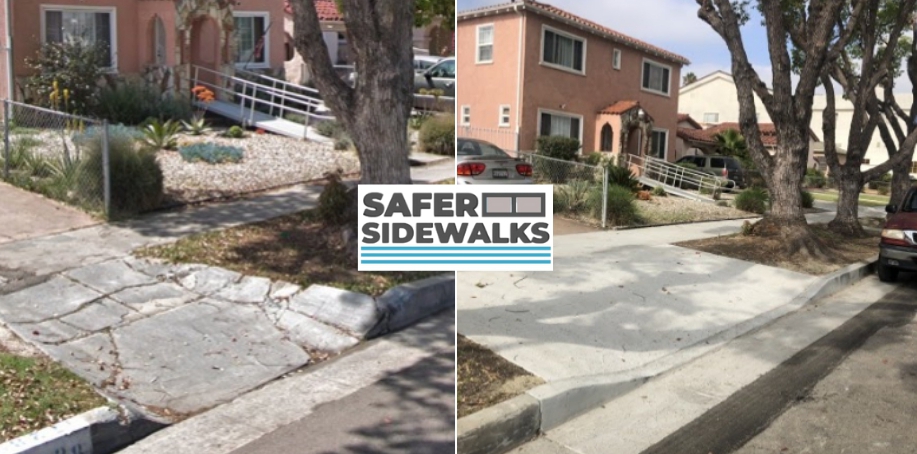
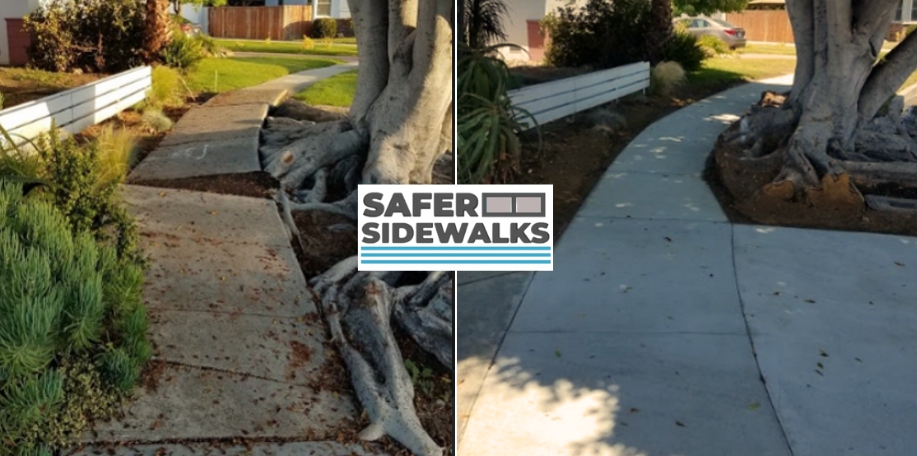
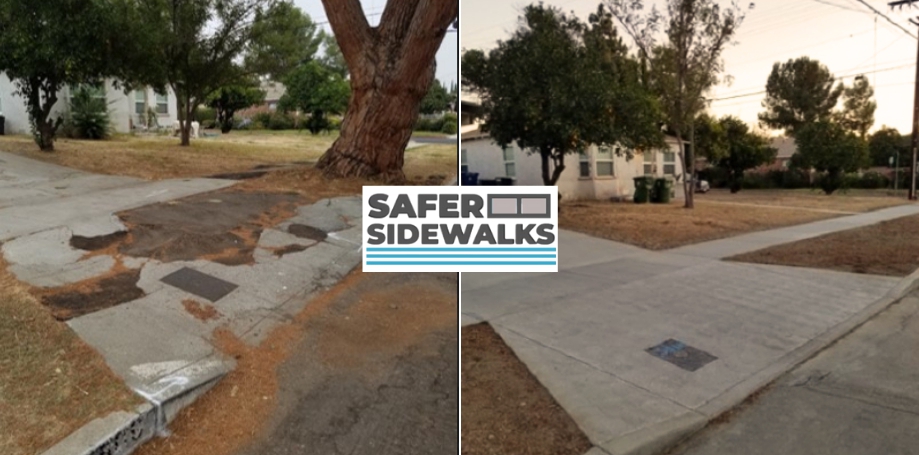
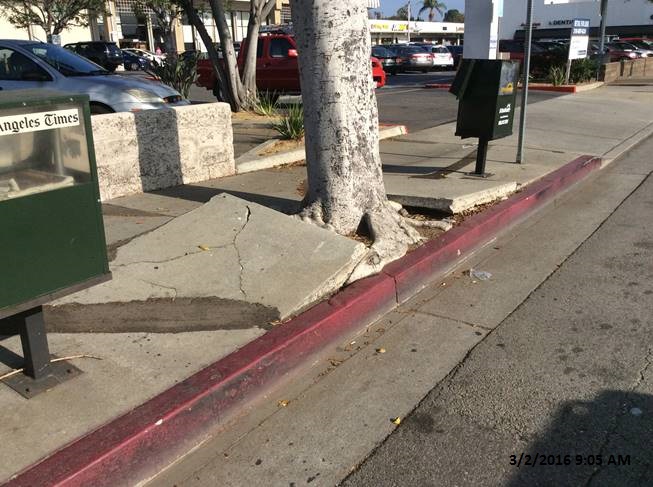
Tree roots. Nine times out of ten, it’s the tree roots that are destroying your sidewalk. Over the decades, the city and developers planted fast-growing trees to line our streets. While they make our walkways bucolic, they wreak havoc on the concrete.
The tree roots lift up the sidewalk, and then water moves in and erodes the soil underneath, allowing the concrete to crack and crumble.
Who is responsible for sidewalk replacement in Los Angeles?
That would be you. I know, I know, the city installed the sidewalk and planted the trees that are destroying the sidewalks. It stands to reason that the city should take care of its own property.
With 11,000 miles of sidewalk to maintain throughout Los Angeles, the city simply doesn’t have the resources to fix it.
Not only that, but in trip and fall cases, the liability is very fuzzy. Yes, the city settles sidewalk lawsuits every year – but property owners can also be on the hook in those litigations.
That means, at the end of the day, you, the property owner, are liable for your sidewalk.
How to get the city to fix your sidewalk in Los Angeles
That’s just not going to happen. The city is not going to fix your sidewalk. If you called MyLA311 and asked, you will be placed on a waiting list – and that waiting list is 10 to 20 years long.
That’s right, it will take the city 10 to 20 years to fix your sidewalk. Do you have that kind of time?
Fret not, there is a work around. The city has a rebate program for property owners looking to fix their sidewalk. It’s part of the city’s settlement to a class-action lawsuit filed against the city because the sidewalks are not ADA-compliant – pedestrians with mobility issues cannot walk down the street with ease.
Sidewalk Rebate Program in Los Angeles
The city’s sidewalk rebate program provides up to $12,000 for property owners to fix their sidewalks. The rebate covers:
-
Driveway aprons (approach)
-
Sidewalks
-
Tree root and canopy pruning
-
All permits necessary for the construction
The rebate does not cover:
-
Sidewalk damaged caused by unpermitted construction work
-
Areas where there are capital improvements planned
To apply for the rebate, you apply via MyLA311. After you apply, it will take about 12 months for the city to respond. They will send you the rebate acceptance via email – so make sure you are checking your email! Once you have accepted the rebate, you will have to find a city-approved concrete contractor to do your work.
Why do property owners reject the sidewalk rebate in Los Angeles?
Believe it or not, most property owners reject the $12,000 rebate. Why?
Simply put, the rebate will not cover all the work the city is going to require you to do. The city is going to require that you:
-
Replace the sidewalk from property line to property line
-
Trim the tree canopy (the leafy green parts)
-
Prune the tree roots
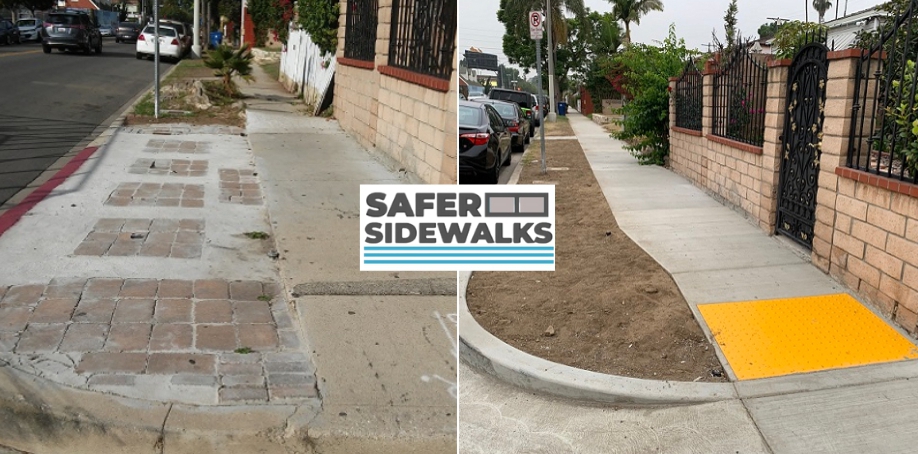
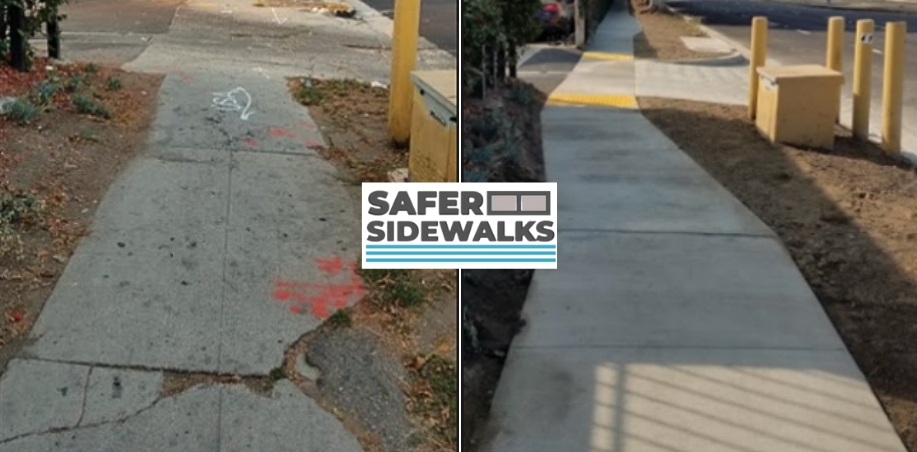
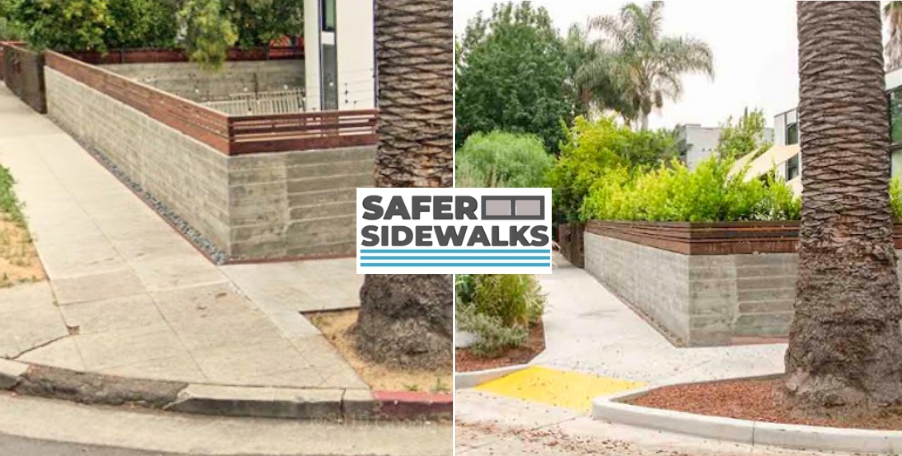
All this work can cost upwards of $30,000. With the rebate, that means you’ll be paying $18,000 out of pocket. Not only that, but think about the requirement to replace the sidewalk from property line to property line. If you live or own property on a corner lot, that means you are basically replacing two sidewalks, plus installing a ramp on the corner, and possibly installing truncated domes on the ramp (those are the yellow domes you see on corner ramps on the street).
If you only have a section or two of sidewalk to replace, you’ll still have to replace the entire sidewalk.
What other options do I have to fix my sidewalk in Los Angeles?
Fret not! There are other (read: cheaper) ways to fix your sidewalk.
With Permits
If you want to replace just a small portion of your sidewalk, you can apply for an A-Permit and permits from the Division of Urban Forestry to get the work done. You can get these permits approved in about three to four months – much quicker than waiting for the rebate.
Not only is this a faster option, it’s also a cheaper option. Even with the permit fees, you’re looking to spend about $15,000 to fix your sidewalk.
Once construction starts, it will take a couple of weeks to complete.
Without Permits
If you’re looking for an even cheaper and faster solution, you can get the work done without permits.
You are, of course, encouraged to complete the work with permits, as the city requires. However, it may be worth your while to get the work done without permits. That way you get the work done fast, and you don't have to worry about someone tripping on your sidewalk while you're waiting for a rebate or a permit.
If you decide to get the work done without permits, it will cost about $10,000 and take about one week to complete.
Ready to fix your sidewalk in Los Angeles? Give us a call. We have the knowledge and experience to complete the entire project – from permits to installation and inspections. Get a free estimate today.
City And Country Concrete Services We Offer

Sidewalk Repair

Curb Drain Coring

City Gutter Repair

Sidewalk Grinding
The Reasons Why Concrete Sidewalks Break
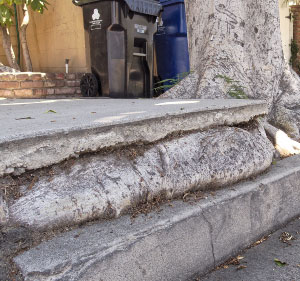
Tree Roots
Tree and other plant roots uplifting the concrete

Erosion
Erosion under the concrete creates weak surfaces

Insufficient Joins
Not enough grooves between the concrete panels

Improper Installation
Cement mix drying too quickly, insufficient compacted base